Love Your Body—Why Are We So Angry?

Love Your Body Like God Loves It

Love Your Body Like God Loves It

As if we didn’t have enough diseases to try to avoid, the current election has created a new one—Political Anxiety Disorder or Election Stress Disorder—hospitalizing many people across the nation. They’re so upset about the outcome of the election affecting their lives, that they’re having panic attacks and all the physical symptoms of anxiety:

  • Pounding heart, sweating.
  • Headaches, stomach upset, or dizziness.
  • Frequent urination or diarrhea.
  • Shortness of breath.
  • Muscle tension, tremors, and twitches.
  • Fatigue or insomnia.

[Tweet “The current election has created—Political Anxiety Disorder—hospitalizing many people across the nation. “]

“Anxiety weighs down the heart.” —Proverbs 12:25a

“So then, banish anxiety from your heart and cast off the troubles of your body.”—Ecclesiastes 11:10a

Anxiety Can Lead to Anger

If you receive my monthly About His Work Ministries email newsletter,* the opening article this month was “When Things Are Out of Control.” I received more comments on that article then I have from any article I’ve written all year. When things happen that we don’t like or don’t want to experience, but can’t change, it makes us anxious and we can become angry. Anger is a legitimate feeling and reaction, but what we do with that anger can damage our health, our body, and our relationships.

[Tweet “Unbridled anger results in bitterness, hardening of the heart, and often an offensive attitude that expresses itself in vile words and/or aggressive behavior. “]

Unbridled anger results in bitterness, hardening of the heart, and often an offensive attitude that expresses itself in vile words and/or aggressive behavior. While there may be a quick release of angry emotion, if the root cause of the anger continues it eats away at mind, body, and soul, and others become victims of the residual fallout.

As the election progresses, I’ve had the most angry, vulgar, mean, vicious lashing out comments I’ve ever experienced on my blog posts and Facebook posts. It’s alarming that people live with such angry, bitter thoughts in their minds and hearts and use hurtful, X-rated words in their daily lives. I’m sure when the election is over, they’ll find something else to be angry about and their health, both physical and mental, will suffer.

[Tweet “Today it’s almost impossible to have a debate without it turning into a disagreement.”]

Today it’s almost impossible to have a debate without it turning into a disagreement.

“Refrain from anger and turn from wrath; do not fret—it leads only to evil.”–Psalm 37:8

Where is the Anger Originating?

“Don’t sin by letting anger control you.”—Ephesians 4:26 NLT

“People with understanding control their anger; a hot temper shows great foolishness.”—Proverbs 14:29 NLT

[Tweet “Do you know the media outlets design the news to raise your blood pressure, anxiety level, and anger meter? “]

Do you know the media outlets design the news to raise your blood pressure, anxiety level, and anger meter? They purposely create headlines to generate a negative response. The media wants you to engage angrily with either the person or situation their reporting on—they want you mad. Occasionally, they’ll throw in a feel good story, but usually it’s SENSATIONAL “BREAKING NEWS” not substantiated or factual . . . just hearsay, opinions, or “maybes” . . . and you walk away worried . . . angry.

As surely as a north wind brings rain, so a gossiping tongue causes anger!”—Proverbs 25:23 NLT

I write articles for an online Christian magazine, and they’ve discovered that the more negative the title, the more people read the article. Christians are being conditioned right along with everyone else.

Physical Signs of Anger

[Tweet “What does anger do to you physically?”]

What does anger do to you physically? Some symptoms are . . .

  • clenching your jaws or grinding your teeth.
  • headache/migraines.
  • stomach ache.
  • increased and rapid heart rate.
  • sweating, especially your palms.
  • feeling hot in the neck/face.
  • shaking or trembling.
  • dizziness.
  • stress which can cause anxiety.
  • increased blood pressure leading to heart disease.
  • eating disorders.

You could pick from the above list, or add to it how you feel when you’re angry or someone around you is angry. Next time, take note of how your body reacts. Or better yet, learn to control your anger and remove yourself from an angry environment or situation.

What Can We Do About Anger to Help Our Bodies?

[Tweet “When you feel a sense of hope and purpose . . . your anger subsides.”]

  1. Our anger may stem from feeling out of control. We don’t think we can make a difference or change our circumstances, but we can. When you’re doing something about a situation and you feel a sense of hope and purpose . . . your anger subsides. I’m going to refer you to a post I wrote for Crosswalk for how to make a difference one person at a time: You Don’t Have to Get Elected or Make Movies to Change Culture.
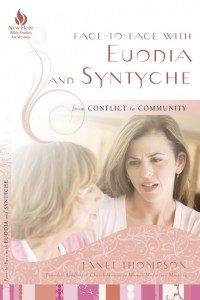
  2. In my Bible study Face-to-Face with Euodia and Syntyche: From Conflict to Community, I discuss the damage anger can do to our bodies if we don’t learn how to deal with it:EuodiaSyntycheCover72dpi1-200x300

Anger is an emotion felt in the moment that requires quick resolution. Many horrific acts occur and hateful words hurl in a “fit of anger.” You cannot retrieve actions or words.

            Uncontrolled raging anger makes us, and everyone around us, miserable. Pastor Doug Fields, likes to describe anger in terms of “outies” and “inies.” An “outie” is someone who spews out anger and doesn’t hold anything back. You know exactly how mad outies are and they want you to know. Often outies are over their anger once they have their “verbal vomit,” as Pastor Doug calls it, and they’re ready to move on. The problem with outies is the potential for people to be hurt, and even maimed, during the verbal, and maybe even, physical outburst.

            Inies on the other hand are the ones that profess they aren’t mad. “Everything’s fine.” they say, maintaining a thin smile while stewing and brewing inside. They may stuff down their anger for a long time while it burns, churns, and turns to bitterness. Inies find quiet, sly, unexpected ways to express their anger, or some never let go—the anger eats away at them physically, emotionally, and spiritually for the rest of their lives. Other inies only can hold their anger inside so long until the pressure builds into a sudden and violent explosion—the fallout being lethal to themselves and anyone in the vicinity.

            So how do you have healthy anger? Here’s the “ABCD” steps to take:

Acknowledge—that you’re angry.

Breathe—take a time out and step away from the source of anger.

Call on God—He knows what you should do regarding the source of your anger—ask Him.

Defuse—release your anger to God.*

*Excerpt from Face-to-Face with Euodia and Syntyche: From Conflict to Community

“Cast all your anxiety on him because he cares for you.”—1 Peter 5:7

stay-calm

*If you don’t receive my online newsletter, contact me or sign up on the website.

If you receive this post by email, please comment here.

Return to top of page

6 Things NOT to Say When Someone is Hurting (And What to Say Instead)

6 Things NOT to Say When Someone Is Hurting

My friend, fellow author and a The MOM Initiative mentor mom, Lindsey Bell, has a new book, Unbeaten, that I wanted to share with you this week. In today’s blog post, Lindsey shares about something I write about also in both Dear God, They Say It’s Cancer (The-Top-Thirteen-Things-to-Do-or-Say to Someone with Breast Cancer) and Dear God, Why Can’t I Have a Baby? (The Top Fifteen Things Not to Say or Do to Someone Experiencing Infertility). It’s hard to know what to say, or not say, to someone who is in deep emotional or physical pain and so often we say something that hurts rather than helps. We’ve all been there: had something hurtful said to us, or said the wrong thing to someone else.

6 Things NOT to Say When Someone is Hurting (And What to Say Instead)

By Lindsey Bell

One of the most important aspects of mentoring is ministering to someone who is going through a hard time.

[Tweet “One of the most important aspects of mentoring is ministering to someone who is going through a hard time.”]

Unfortunately, there is often confusion as to what is best to say when someone is hurting.

We want to encourage people, not make their pain worse, but we don’t always know what to say.

After each of my four consecutive miscarriages, and during the years of waiting, testing, and grieving, people tried to say things to me that would comfort my broken heart. They meant well, just as most people do when they attempt to comfort someone who is hurting.

Unfortunately, many of their well-intention words did more harm than good.

Here are a few things you should never say to someone who is hurting (and a few ideas of things you can say instead).

[Tweet “6 Things NOT to say to someone who is hurting (and what to say instead) “]

  1. You just need to trust God (or God’s timing or God’s plan, etc.).

While this might be true, it’s not a helpful thing to hear right after a loss or while the pain is still fresh.

Instead, say, “I’m so sorry.”

And that’s it. You don’t have to offer answers to someone going through a hard time.

[Tweet “You don’t have to offer answers to someone going through a hard time. “]

  1. There’s a reason for everything.

Really? Are you sure?

I guess this might be true. There probably is a reason for everything, but maybe that reason is simply that life stinks sometimes. Maybe that reason is that bad things happen.

Maybe there isn’t some theological, deep reason that God allowed this trial into their life. It’s possible, of course, there is a deeper reason. Maybe God is planning to use this situation in some really huge way.

But isn’t it also possible that this bad thing happened simply because it happened…not because it was a part of some huge plan?

Instead, say, “This stinks.”

  1. At least you have….

At least you have another child…. At least you had X number of years with him. At least you have …

I think the reason people say this is because they want the person who is hurting to focus on his or her blessings.

And though it’s certainly helpful to count your blessings, there’s also a time and place for grief. People need to grieve, and pointing out the positives in their situation does not help them grieve.

[Tweet “People need to grieve, and pointing out the positives in their situation does not help them grieve.”]

Having one child does not make the loss of another any easier to swallow. (It might serve as a distraction, but it doesn’t negate the loss of the other child).

A loss is a loss, so it’s better not to minimize that loss by bringing up the positives in the situation.

Instead say, “Can I pray for you right now?”

And then actually do it. Right then. Right there.

  1. Next time will be different (or God is going to fix this or something similar).

I can’t count the number of times people told me this. After our first miscarriage, they told me our next pregnancy would be different. It wasn’t. After our second miscarriage, they said it again. It wasn’t.

The truth is, we don’t know what the future holds, so it’s better not to pretend that we do.

[Tweet “We don’t know what the future holds, so it’s better not to pretend that we do.”]

Instead, say, “I’m going to the grocery store. What can I pick up for you?” Or, “I’m running by Sonic. What kind of drink would you like?”  

People mean well when they say, “Let me know if I can do anything.” But most likely, people won’t take them up on their offer. Instead of offering general assistance, offer to do something specific.

  1. I know how you feel.

No, no, you don’t. Even if you have gone through something very similar, it’s not exactly the same because you are not the same person.

[Tweet “No two pains are exactly the same.”]

No two pains are exactly the same.

Instead, say, “There are no words.”

Because really, there aren’t. There are no words that will instantly fix their situation.

  1. God won’t ever give us more than we can handle.

This statement bothers me for two reasons.

First, is makes it sound like God is the one handing out the painful situations. God allows death, but I don’t think he “gives” it to us.

Secondly, I’ve never seen this idea in Scripture anywhere. In fact, I’ve seen many examples of the opposite.

I’ve seen God allowing really hard things into peoples’ lives so they will learn to trust in Him.

Instead, say NOTHING. Just be there.

What other things would you add to this list?

If you received this post by email, leave a comment here.

This post is part of Lindsey’s blog tour to celebrate her new Bible study and devotional, Unbeaten: How Biblical Heroes Rose Above Their Pain (and you can too).

To celebrate her book, she’s giving away a HUGE bundle of books! Leave a comment on this post to be entered to win. You can get more entries by commenting on other blogs in the tour as well. Get a full list of participating blogs here: www.lindseymbell.com/unbeaten-is-here-win-this-huge-bundle-of-books.

Unbeaten Cover

About Unbeaten:

Why does life have to be so hard? If you’ve ever asked this question, you’re not alone. Difficult times often leave Christians searching the Bible for answers to some of life’s most difficult questions.

Questions like:

Does God hear me when I pray?

Why isn’t He doing anything?

Does He even care?

In Unbeaten: How Biblical Heroes Rose Above Their Pain (and you can too), Lindsey Bell walks with readers through the stories of men and women in the Bible who went through difficult situations. In this 10-week Bible study and devotional, she addresses many of these questions and helps readers learn how they too can be unbeaten.

IMG_0062

About Lindsey Bell:

Lindsey Bell is the author of the Bible study and devotional, Unbeaten, and of the parenting devotional, Searching for Sanity. She’s a stay-at-home mother of two silly boys, a minister’s wife, an avid reader, and a lover of all things chocolate. Lindsey writes weekly at www.lindseymbell.com about faith, family, and learning to love the life she’s been given.

Return to top of page

What’s Your Story?

Little girl praying

As many of you know, I’ve been writing the past three months on a new book which will be out March, 2016, How Good is God? I Can’t Remember … Creating a Culture of Memories.  I hope you’ve enjoyed all the guests who have enriched this blog with posts on many varied topics. I’m blessed to have so many talented and gifted author friends and I know you enjoy hearing from them.

I was surprised when several people asked me if I thought this would be my last book? I wasn’t sure why they would ask that except for the fact that we were under great spiritual attack and duress while I wrote on a topic that the enemy hates–remembering God in a culture that is quickly forgetting God.

But that would never stop me from writing and speaking for the Lord, until the day He decides to take me home. My ministry is About His Work Ministries and I plan on being about His work until my last breath. So it might not surprise you that I’m gearing up for the next book. I gave you a glimpse into it several months ago when I asked for stories, but I switched plans when the How Good is God? book had such a short deadline. So now I’m back to the mentoring book and I need your stories.

Do You Have a Mentoring Story?

[Tweet “Do You Have a Mentoring Story?”]

If you follow me, you know that my passion is mentoring—Sharing Life’s Experiences and God’s faithfulness. Since I wrote Woman to Woman Mentoring: How to Start, Grow, and Maintain a Mentoring Ministry in 1997, God has been starting mentoring ministries in churches all over the world, and mentors and mentees (M&M’s) have been experiencing the blessings of mentoring.

Over the years, many ministry leaders have sent me stories about starting the Woman to Woman Mentoring Ministry, and many M&M’s have sent me their stories too; but I also know there are many untold stories that would bless my readers. Will you help me write this book?

I Need Your Help

The working title is Mentoring for All Seasons: Sharing Life’s Experiences and God’s Faithfulness. Here’s what I could use:

  1. What would you want to read about in a mentoring book about the seasons of a woman’s life?
  2. What would encourage you to be a mentor or mentee?
  3. If you’ve been in a mentoring relationship—either as a mentor or mentee or both—would you tell me your story? Even if it didn’t go like you planned.

If you would like to share your story, please leave a comment and how to contact you. Or go to the contact page on this website and leave me a message with your email address and I’ll give you more details.

[Tweet “If you would like to share your story in my new book …”]

Generation to Generation

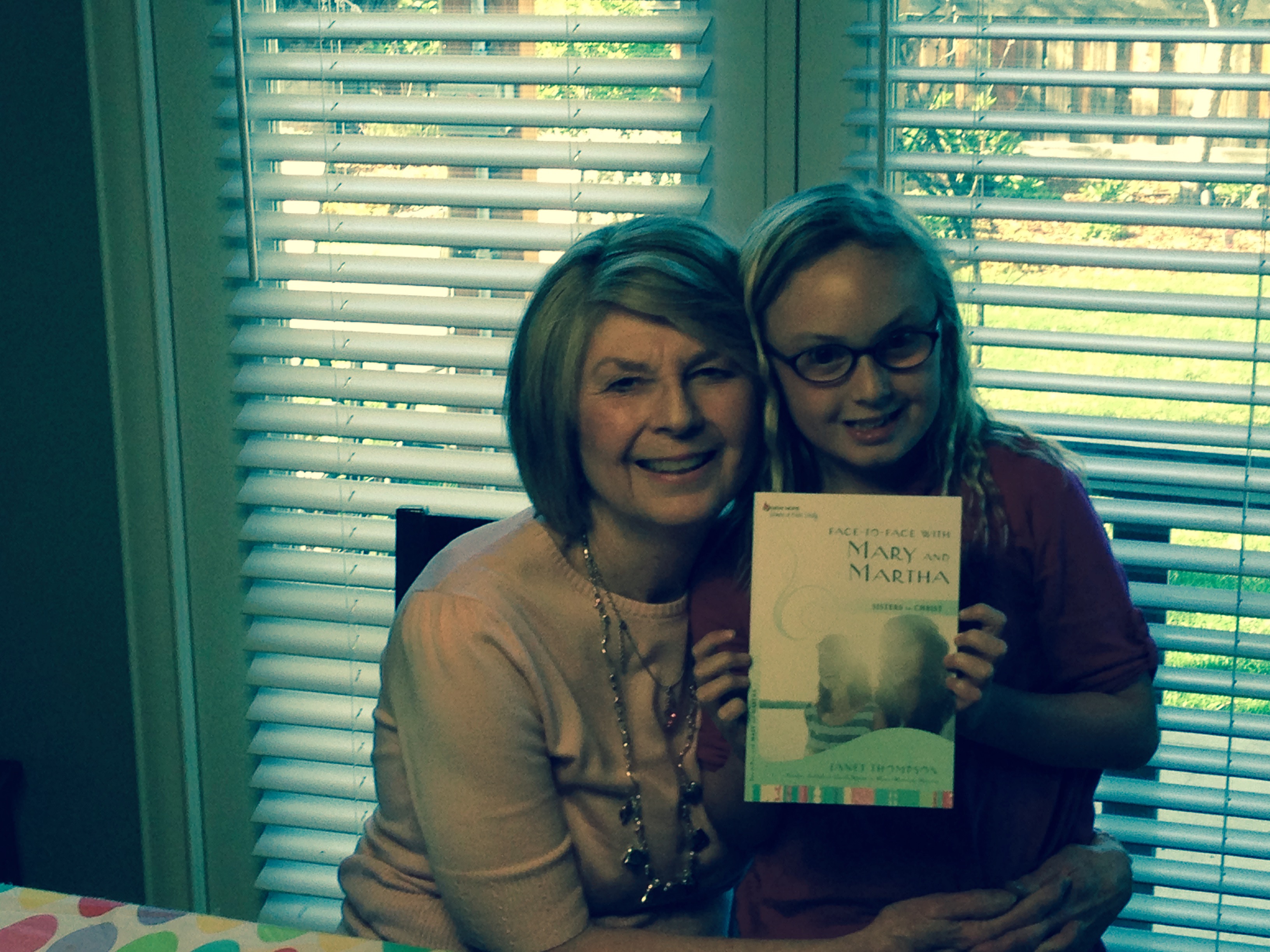
FullSizeRender-2My 9-year-old granddaughter Katelyn asked if she could have one of my books for Easter, which made my heart swell with joy. I decided she was not too young for us to do a Bible study together, so I gave her Face-to-Face with Mary and Martha: Sisters in Christ.

[Tweet “An important aspect of remembering God, is helping the next generation know God.”]

An important aspect of remembering God, is helping the next generation know God. It’s our job description as Christian men and women!

Together we can reach, encourage, and teach what we’ve been taught to the next generation.

 Your job is to speak out on the things that make for solid doctrine. Guide older men into lives of temperance, dignity, and wisdom, into healthy faith, love, and endurance. Guide older women into lives of reverence so they end up as neither gossips nor drunks, but models of goodness. By looking at them, the younger women will know how to love their husbands and children, be virtuous and pure, keep a good house, be good wives. We don’t want anyone looking down on God’s Message because of their behavior. Also, guide the young men to live disciplined lives.

Titus 2:1-6. The Message


Return to top of page

Want a New Start in 2015?

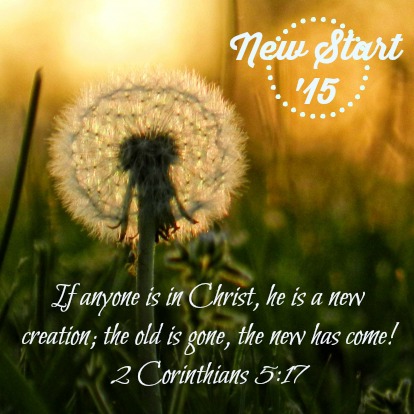
New Start 15 theme verse-1

 My friend and fellow author/speaker, Kathy Howard, is inviting you and me to join her in a search for holiness and a deeper walk with the Lord in 2015! In her guest blog today, she tells us more about New Start 15 and how to get involved. If you’re wondering why my Bible Studies are not listed on their Resource List, I’m writing fast and furious on a new book and wasn’t able to be a contributor for New 15, but I support it 100%. You can also consider starting 2015 with one of my Bible studies to do on your own, with a friend/M&M, or in a group.

New Start 15 by Kathy Howard

New Start 15 by Kathy Howard

I love the “undo” button on my laptop. You know the one – that little arrow that curves to the left. When you click it, the last thing you did magically disappears.

Sometimes I wish life had an “undo” button. I could click it to magically erase the unkind words I blurted. Or wipe out my selfish behavior. Or eliminate that wrong decision. To “undo” all those things that brought unwanted consequences or now weigh heavy on my conscience.

Yep. In fact, sometimes it would be great to start over all together. To get a clean slate. To get a complete do-over.

Guess what? If you’re a Christian, that’s exactly what you got when you entered into a saving relationship with Jesus Christ. And sister, if things have gotten a bit off track since then, it’s not too late to undo and start new. In fact, now is a great time for a NEW START.

[Tweet “Need a do-over? It’s not too late. #NewStart15”]

New Start 15

If you’d like to “undo” a few things or even start new on a bigger scale, consider joining me for “New Start 15.” During January, a few friends and I will be leading a month-long journey into holiness. Together we’ll explore what it looks like to become a “new creation in Christ,” to practically live out the set-apart, holy life to which God calls us.

Therefore, if anyone is in Christ, the new creation has come: The old has gone, the new is here! 2 Corinthians 2:17, NIV

The “old” life looks like the world around us. And it’s burdened with the weight and consequences of worldly living. But the “new” life is radically different from the world, holy and set apart to God.

There is glorious freedom and joy in living a life of holiness. Freedom from the weight and consequences of sin. And joy in a deeper intimacy with our holy God.

[Tweet “New life in Christ brings freedom & joy through a holy life. #NewStart15”]

Do you like the sound of freedom and joy? The chance for a New Start? Our God is the God of second chances, clean slates, and do-overs.

[Tweet “Our God is the God of second chances, clean slates & do-overs. #NewStart15 “]


Participation in New Start 15 is simple.

Here are a few ways you can get involved:


  • Use the New Start 15 Bible Reading Plan in your personal quite time January 5 – 23. (Free download)
  • Like the New Start 15 Facebook page to keep up with daily devotional blog posts, get words of encouragement, and share thoughts from your own journey. (You can also download the New Start 15 bloggers list and schedule.)
  • Follow the New Start 15 “blog hop” January 5-23 (weekdays only) as the New Start 15 team blogs about living the new, holy life in Christ. (List of New Start 15 Contributors)
  • Check out the New Start 15 Resources List for books, Bible studies, blog posts, printables and more to help you on your journey. (Free Download)
  • Invite your friends to join you in the New Start 15 journey by sending them the link to this post.

Do you long for deep intimacy with God? Do you desire for your life to please and glorify Him? Do you want your life to point others to Jesus? If you answered “yes” to any of these questions, then New Start 15 is for you! Join us in January as we dig into God’s Word to find out what He says about living the new, holy life in Christ.


Are you ready for a New Start? I’d love to hear your thoughts and comments. Or simply let me know you’re in! Happy New Year!

Kathy Howard

Kathy Howard


Return to top of page

Parents of the Bible Mentor Today’s Parents

perf5.000x8.000.indd

Our guest post today is by friend and fellow The M.O.M. Initiative mentor mom, Lindsey Bell. Next week, I’ll be sharing how I set goals for the New Year for my personal, ministry, and married life. One of those goals is to read through the Bible in a year. I love to read in different translations or use different guides to change it up each year so I was eager to learn more about Lindsey’s new book and how parents of the Bible could mentor us today!


A Resource for Spending More Time with God in the New Year

Lindsey Bell


With a new year right around the corner, many of us are already thinking about our New Year’s Resolutions. One New Year’s Resolution that seems to be a favorite among Christians is to spend more time in the Word…to read the Bible every day, or pray more often, or go to church regularly.

I want to share with you today about a new resource that can help you spend more time with God.

[Tweet “I want to share with you today about a new resource that can help you spend more time with God.”]

It’s a book called Searching for Sanity: 52 Insights from the Parents of the Bible.

This year-long devotional is designed for busy women who want to spend time with the Lord, but don’t have a lot of time to spare.

[Tweet “This year-long devotional is designed for busy women who want to spend time with the Lord”]

Each week provides a new devotional, as well as simple activities to do throughout the week to help reinforce the application points.

Here’s a little bit more for moms about the book:

Have you ever looked at your beloved children and wondered, what in the world am I doing? Why did God trust me—of all people—to raise them?

[Tweet “Motherhood is the most difficult job many of us will ever take.”]

Motherhood is the most difficult job many of us will ever take. Searching for Sanity offers moms an opportunity to take a breath, dig into the Word, and learn from parents of the past.

In short devotions designed for busy moms, this book uses the parents of the Bible—both the good and the bad—to inspire today’s mothers.

You can read through this devotional alone or with a group of moms!

Let’s talk: what are your favorite resources to begin the year well?

[Tweet “Leave a comment for a chance to win six of @Lindsey’sBell’sbooks!”]

This post is part of Lindsey Bell’s December blog tour. To enter to win Lindsey’s MEGA-GIVEAWAY (the winner will receive 6 books!), leave a comment on any of Lindsey’s guest posts this month (including this one).

Enter to Win Lindsey Bell's Mega-Giveaway-1

For a full list of participating blogs (and other ways to enter!) visit this post on Lindsey’s blog.

You can pick up a copy of Searching for Sanity at Amazon or Barnes and Noble.

 Lindsey Bell_web format-2

About Lindsey Bell:

Lindsey Bell is the author of Searching for Sanity: 52 Insights from the Parents of the Bible. She’s also a stay-at-home mother of two, minister’s wife, avid reader, and chocolate lover. You can find Lindsey online at any of the following locations:

Her blog: www.lindsey-bell.com

Her website: www.lindseymbell.com

Twitter: www.twitter.com/LindseyMBell

Facebook: www.facebook.com/AuthorLindseyBell

Pinterest: www.pinterest.com/LindseyMBell01

Return to top of page

A Mentee Shares Her Story by Erica Wiggenhorn

Last week’s guest post was written by Judith Couchman who shared how she overcame misgivings to call Erica Wiggenhorn to see if she would like to be mentored in writing. It was a hard phone call for Judith to make but she wrote about how this was The Call That Changed My Life. If you haven’t read that post yet, be sure to read it before you read today’s guest post by her mentee, Erica Wiggenhorn. Judith and Erica confirm what I teach about mentoring: It’s always a  two-way blessing.

Receiving the Call by Erica Wiggenhorn

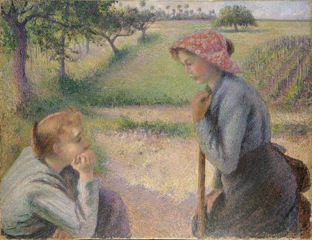
Camille_Pissarro_Two_Young_Peasant_WomenPicture by Camille Pissarro

Life felt overwhelming. Two steps forward, three steps back. It wasn’t the most difficult time of my life, tragedy and blackness had already shoved my face into the dirt and sent me reeling. Rising back up, I had pressed on in my journey. Digging into God’s Word and participating regularly in Bible study had lifted me to my feet and steadied my steps.

Deadness and dryness marked my current season, sapping my strength. Incredibly busy, yet empty. Even Bible study seemed meaningless and inapplicable to my present circumstances. I cried out to the Lord, “Does it grieve your heart that no one wants to study your Word just to get to know You? Why isn’t there a study that focuses on Who You Are and not what you can do for me?”

[Tweet “Does it grieve your heart that no one wants to study your Word just to get to know You?”]

The Lord nudged my heart and whispered in my Spirit: “You write one. Write a study about Who I Am.”

“Um, that wasn’t the question, Lord! I can’t write a study, I barely have time to brush my teeth!”

“Write it,” He persisted.

“How? Where would I even begin?”

“Ezekiel. Study the prophet.”

“Ezekiel?” I don’t know if I’ve ever even read through that whole book of the Bible before!”

After several months of resisting, the emptiness in my soul was excruciating, and with no lift in my circumstances in sight, I sat down and opened my study Bible. The introduction jumped off the page at me, “The Israelites worshipped God for what they thought He could give them, not for Who He Was.” The hair on the back of my neck stood up. This was exactly what I had been expressing to the Lord for so many months: I just want to know Who You Are!

“Ok, Lord! I’ll do it!” Now what? The task seemed daunting. I began to study, scribbling notes in a composition book and digging through commentaries. While life still felt overwhelming, the discoveries about God during my studies energized me. However, I still had absolutely no idea how to form all of this information into a study or even if I was ever meant to share what I was discovering.

The Next Steps

On a particularly difficult morning, I had dropped my children off at preschool in my socially acceptable pajamas, aka old, ratty sweats, and drove home in my mini-van. My phone rang and I answered it. My friend Kim boldly announced, “Every day during my quiet time, the Lord keeps laying you on my heart. Is there something going on with you?”

The floodgates poured open. I told her about my emptiness, my feelings of being completely overwhelmed with the daily tasks of life, and this new crazy endeavor of studying the Book of Ezekiel and attempting to write a Bible study. I didn’t know Kim well and what she said next shocked me, “Well, I am supposed to go on a writer’s retreat tomorrow. There are only 12 spots and one of the ladies hurt her back and can’t come. I think you’re supposed to be there.”

The next morning with my composition book full of scribbles, I headed up the mountain, completely unsure of what to expect. If anything, it felt wonderful to step away from daily life. It was there I met Judy Couchman. She spent the next three days inspiring us to pursue the call of writing. She encouraged me, looked me in the eye and said, “God has called you to this and I know you can do it!” I knew I had to finish this study, somehow or another.

A Relationship Was Born

The following year, I returned to that same retreat with my study completed. I placed a copy in Judy’s hands and her eyes lit up. She rejoiced that I had fulfilled the call that the Lord had placed in my heart and done the work. She prayed over the study and over me.

A few weeks after coming home and wondering what the Lord had next for me in the way of writing, my phone rang. It was Judy. I could sense a slight quake in her voice, which was so unlike the professional, accomplished woman I had met at the retreats. What she said next made my heart skip a beat, “I believe God is calling me to mentor you. Would you like a writing coach?” She didn’t even need to finish her question before I blurted out, “YES!”

Two studies later, I’m still writing. Without the accountability and nudging, I wouldn’t be where I am. Mentoring kept me moving forward when the journey seemed impossible. Judy’s words on the other end of the phone kept me focused on the calling and avoiding the distractions.

[Tweet ” Mentoring kept me moving forward when the journey seemed impossible.”]

Sometimes we just need an arm around us or a shoulder to cry on. Other times we need someone to look us in the eye and say, “I know you can do it!” Most of the time, we need a reminder of that gentle whisper God spoke into our soul to muster up the courage to continue to obey Him. This is the work of a mentor.

Has God given you a story to tell? Who can you invite to come alongside you to do the work? Guiding that call is the delight of a mentor.

[Tweet “Has God given you a story to tell?”]

Author/Mentee Erica Wiggenhorn

Author/Mentee Erica Wiggenhorn

Erica Wiggenhorn is the founder of Every Life Ministries, encouraging women to live significantly through the study and application of God’s Word. She is the author of Ezekiel: Every Life Positioned for Purpose and Moses: Every Life Proof of God’s Promises. For more information about Erica and her ministry, visit www. EricaWiggenhorn.com.9781615079094_COVER.indd

Return to top of page

Generation Gaps Not in God’s Plan

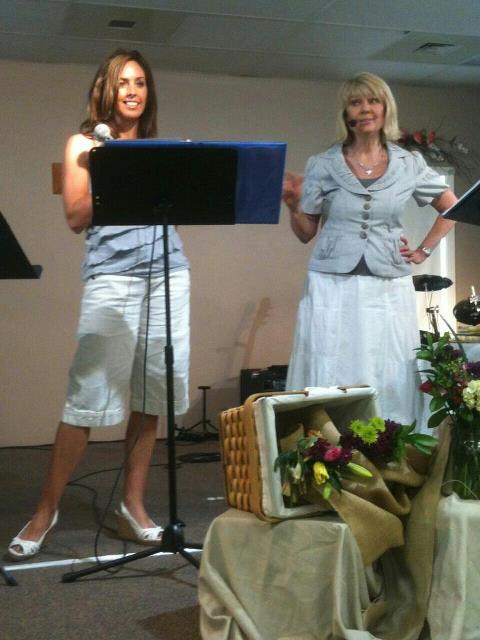
Kim and me Mother's Day Tea

Sharing the podium with my daughter Kim as “Two About His Work”

Do you remember when you were the next generation full of hope and ideas and ready to leave your mark on the world? I do. I also remember feeling misunderstood and unappreciated when sharing thoughts and ideas with older adults. Yet 36 times in the New Living Translation of the Bible, the Lord uses the term “generation to generation.” Many more verses instruct us to pour into those who are coming up behind us in the church and in our homes. It was God’s plan for the continuation of His church throughout the generations.

A Privilege Not a Burden

Sharing with the next generation some of what God and life has taught us is truly an honor and a privilege. The blessings multiply when the next generation is teachable and eager to learn.

Throughout the Bible, God instructs one generation of believers to teach and train the next generation [see verses at the end of this blog]. Praise God, over the centuries believers have followed this mandate. Think of it: if they hadn’t, you and I would not be Christians today! We are benefactors of the sacrifices of believers who have gone before us. Over the years, followers of God and His Son, Jesus Christ, have felt compelled to assure that the next generation:

  • has access to the Bible and understands its contents
  • knows how to communicate with God through the Holy Spirit and prayer
  • receives guidance in leading a godly life

What Is Our Generation Doing?

The question our generation must ask is: What is God calling believers—you and me—to do today? How can we invest our lives in the next generation, as Elizabeth (mother of John the Baptist) did with Mary (mother of Jesus)? Each of us must answer that question in a very personal and real way. If you are:

  • A mother, you are influencing the next generation through your children.
  • A Grandmother, your grandchildren.
  • An employer, your employees.
  • A ministry worker, the benefactors of your ministry.
  • A pastor, your congregation.
  • A school teacher, your students.
  • A Sunday school teacher, the children in your classrooms every Sunday.
  • A mentor, your mentee.

Why Do We Have Generation Gaps?

There should never be a generation gap in the church—that was not God’s plan. God commanded that one generation was to pass down His truths to the next generation. In churches today, the gap between generations is often so wide that the only thing passed between the two is mistrust and misunderstanding—all in the name of Jesus.

I believe it’s often the older generation who perpetuate the gap by wanting everything to stay the same—same music, same way of doing things, same church service, same church activities . . . . Many churches relegate the young people to their own groups, and their input—whether in music or talents or ideas—is not welcome in the main sanctuary. Then they wonder why the youth are leaving the church in droves.

Church Is Not About Us

Our job as Christians is not to insist that everything goes our way. The purpose of church is not simply to spiritually feed the congregation; we’re to pass on what we learn to others. The Great Commission tells us to go out and tell the world about Jesus, and that includes the next generation.

If we want to stay relevant in the lives of the next generation, we need to learn how to embrace their style of worship . . . their way of communicating . . . their world. If we want to have an impact in their lives—to help guide them in the ways of righteousness—we need to speak their language, care about the things they care about, and reach out to them in love with a desire to understand what’s important to them.

My Call to “Feed My Sheep”

When I rededicated my life to the Lord in the summer of 1992, it marked a turning point in my life. I moved from thinking of how I could further myself in this world, to how could I further God’s kingdom. When I asked myself the question of what God was calling me to do, He clearly answered. I was to take a huge risk of leaving a well-paying career to go into full-time ministry. Not just any ministry—but a Woman to Woman Mentoring Ministry that would teach and train the next generations of believers. The rest is history, as my grandmother used to say.

What Are You Doing to Bridge the Generation Gap?

Many churches today are mentoring, embracing, and equipping the next generation—the future of the church. If you attend or serve in one of those churches, I’d love for you to share specifics of how you are fulfilling Psalm 145:4 NLT

“Let each generation tell its children of your mighty acts; let them proclaim your power.”

Here are some verses that reveal the significance of one generation passing down God’s truths to the next generation:

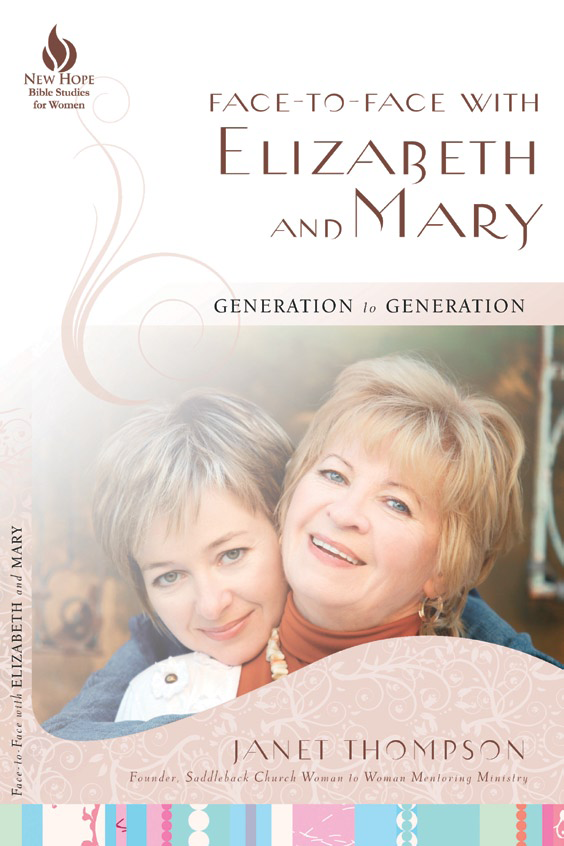
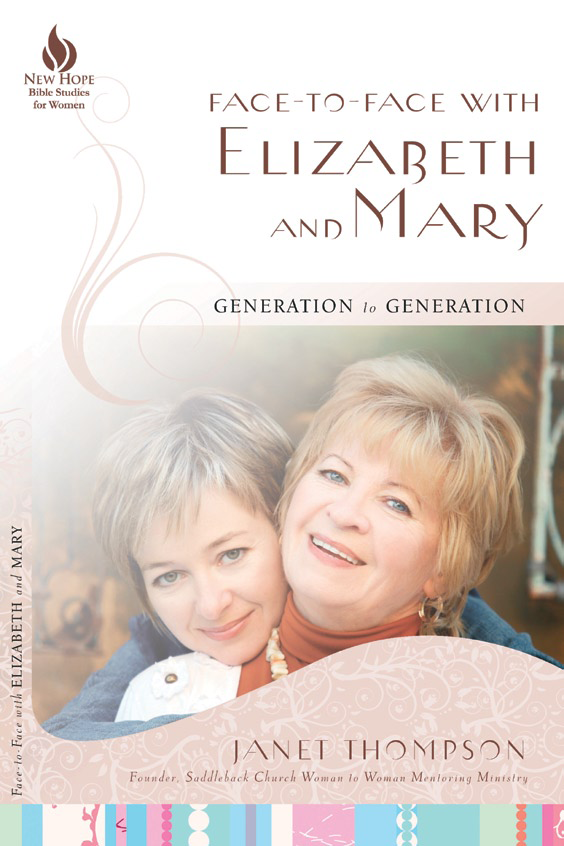
Elizabeth and Mary coverElizabeth and Mary coverSome excerpts of this article are from Face to Face with Elizabeth and Mary: Generation to Generation.

Elizabeth and Mary coverElizabeth and Mary coverElizabeth and Mary coverElizabeth and Mary cover Elizabeth and Mary coverElizabeth and Mary coverElizabeth and Mary cover

Return to top of page

Elizabeth and Mary: Generation to Generation

older and younger women together You’ve probably read the story many times of Mary’s visit from the angel Gabriel in Luke 1:26-45. It’s an amazing revelation to a young teenage girl that she is to become the mother of the Messiah. But there is another parallel story told in these verses—the story of the relationship between Mary and Elizabeth, the mother of John the Baptist who would be the forerunner of Jesus. The passage in Luke actually sets the scene by pointing out that Elizabeth was six month’s pregnant. Two women with miracle pregnancies–one very old and one very young.


The Birth of Jesus Foretold

 In the sixth month of Elizabeth’s pregnancy, God sent the angel Gabriel to Nazareth, a town in Galilee,  to a virgin pledged to be married to a man named Joseph, a descendant of David. The virgin’s name was Mary. The angel went to her and said, “Greetings, you who are highly favored! The Lord is with you.” Mary was greatly troubled at his words and wondered what kind of greeting this might be. But the angel said to her, “Do not be afraid, Mary; you have found favor with God. You will conceive and give birth to a son, and you are to call him Jesus. He will be great and will be called the Son of the Most High. The Lord God will give him the throne of his father David, and he will reign over Jacob’s descendants forever; his kingdom will never end.”  “How will this be,” Mary asked the angel, “since I am a virgin?” The angel answered, “The Holy Spirit will come on you, and the power of the Most High will overshadow you. So the holy one to be born will be called the Son of God. Even Elizabeth your relative is going to have a child in her old age, and she who was said to be unable to conceive is in her sixth month. For no word from God will ever fail.” “I am the Lord’s servant,” Mary answered. “May your word to me be fulfilled.” Then the angel left her.—Luke 1:26-34

Mary Visits Elizabeth

At that time Mary got ready and hurried to a town in the hill country of Judea, where she entered Zechariah’s home and greeted Elizabeth. When Elizabeth heard Mary’s greeting, the baby leaped in her womb, and Elizabeth was filled with the Holy Spirit. In a loud voice she exclaimed: “Blessed are you among women, and blessed is the child you will bear! But why am I so favored, that the mother of my Lord should come to me? 44 As soon as the sound of your greeting reached my ears, the baby in my womb leaped for joy.Blessed is she who has believed that the Lord would fulfill his promises to her!”—Luke 1:39-45

Elizabeth Makes Time for Mary

Gabriel gave Mary a shocking message from the Lord, However, Mary also received the second part of the message that her elderly relative Elizabeth was in a similar circumstance, and that Mary would find comfort and reassurance in spending time with her. Gabriel’s mention of Elizabeth compelled Mary to go to her immediately, no matter what the inconvenience, time, energy, or sacrifice. Mary did not stop to count the cost, consider the hardships of the travel, analyze if that was really what the Lord meant, or worry about how it would affect her schedule, or wonder if Elizabeth was too old to relate to her. Mary also didn’t send a message to Elizabeth that Elizabeth should come visit her—after all, she was carrying the Messiah. No, Luke 1:39 says, “Mary got ready and hurried” to Elizabeth’s house. Young Mary seemed to know that she needed Elizabeth, and Elizabeth might need her. From Elizabeth’s response at Mary’s arrival, it doesn’t seem like Elizabeth worried or fretted that the house was a mess, or she was out of coffee and cookies, or that she looked a sight and her husband, Zechariah, really wasn’t himself these days since he could not speak after doubting God. She didn’t tell Mary that there were a million things to do to get ready for her own new baby, so this probably wasn’t a good time for Mary’s visit. She wasn’t repulsed that her unwed, pregnant, teenage relative was on her doorstep. Instead, she joyfully welcomed Mary and they had a blessed reunion!

How Does the Story of Mary and Elizabeth Apply to Us?

Today, our lives are so busy we sometimes feel we don’t have time to invest in true friendships and relationships. We fill our days with work, soccer games, church activities, house cleaning, shopping, errands—you know the routine. All good, necessary things. Yet how much of our day do we also fill with TV viewing, Internet browsing, and shopping for things we really don’t need that cause us to work more to acquire and maintain? Mentors and mentees often complain that the hardest part of their relationship is finding time in their busy lives to meet, even though they know it would benefit them both. Others report that when they surrender their schedule to the Lord, He seems to give them more time and energy in their day to accomplish all the things he knows are important. Just like Elizabeth and Mary, God will work miracles in our relationship, if we just give Him the time. I would love to hear about your “Elizabeth and Mary” experiences. Please share in the comments so others can be blessed.

Spend time with someone 20 years older and you’ll leave wiser

Spend time with someone 20 years younger and you’ll leave energized!

Sections of this post were excerpts from Face-to-Face with Elizabeth and Mary: Generation to Generation. This study has questions to do on your own, with someone else, or as a group. It would make a great gift to give to yourself and a friend to do together and learn more about this beautiful relationship.

Elizabeth and Mary cover


Return to top of page

Got Books?

academic,books,leisure,libraries,research,shelves,volumes,information,knowledge,stacks

My former Pastor, Rick Warren, says that every leader is a reader. Pastor Rick is a voracious reader, and consequently, knowledgeable and well versed on a variety of topics. I understand and share Pastor Rick’s passion for reading as evidenced by visitors to our home: walls of bookshelves overflowing with books, and books and magazines bookmarked or dog-eared in every room. I never want to find myself without something to read, so I’m often reading many different books and articles in different rooms of the house, at the same time. I had to laugh when my 7 year-old granddaughter asked why I had a magazine rack in the bathroom! That seemed normal to me J.

Sharing a Love of Reading and Writing

This past Saturday, I enjoyed spending the day with others who share my love of books. I presented my authored books at the Pacific Northwest Church Librarians annual conference held in Nampa, Idaho. Many local authors were there with their books too, and we all enjoyed a keynote presentation from the delightful and prolific Lauraine Snelling, author of 70 books and still writing.

Lauraine asked if we could remember a librarian who had influenced us as a young reader. Since her audience was comprised of librarians and authors, all our hands shot up! Lauraine mentioned that when she was a child, the librarians at her local library and the bookmobile fostered her love of books.

Lauraine’s question prompted memories of my childhood and the bookmobile that parked in our neighborhood every other week. If you’re too young to remember bookmobiles, they were libraries on wheels. The closest thing I can compare them to is a very large, gutted out motor home with bookshelves full of books lining the walls. The local neighbors could check out and return books.

As a kid, I would ride my bike to the bookmobile and check out my limit of books—the library limit or the limit I could fit into the basket on my bike, whichever came first. When I was sixteen and could drive, I spent countless weekends at the library doing research for class projects. I would pack a lunch and spend the day. Just walking into the library gave me the same rush as walking into a bookstore does today. So many books, so little time, as I’ve always been a slow, but persistent, reader.

Fostering the Love for Books in the Next Generation

Today, I live in a tiny rural town—no bookmobiles, but we have a brand new library where my grandkids love to go when they come to visit. We check out their limit of books, DVDs, and backpacks full of fun activities—going to the library is actually right up there with going to the pool and the river—well maybe a close second. But I love it when one of them asks if we can go to the library!

Many of our eleven grandchildren have their own library card at their local libraries, and Grampa and I often choose books for birthday and Christmas gifts for the grandkids and their parents.

How Can Reading Change Your Life?

I did not set out to be a writer. I have degrees in Food Administration, Business Administration, and Christian Leadership, but not writing. I’ve always been in awe of those who could engage a reader by mastering the art of conveying and organizing thoughts, ideas, research, and words into a book. I never thought that would describe me someday. Then in 1997, without me seeing it coming, God asked me to put into writing how to start a mentoring ministry. Still I didn’t consider myself an author; I was just writing a manual for how to start, grow, and maintain a mentoring ministry. Then those who used Woman to Woman Mentoring How to Start, Grow, and Maintain a Mentoring Ministry to start their mentoring ministries wanted to know how to train, and offer mentor and mentee handbooks. More “resource” writing.

Next, it was my husband suggesting I write Bible studies for the mentors and mentees to study together and the Face-to-Face Bible Study series was born. Then, I had breast cancer and longed for a book not yet written. God prompted me that the purpose in my breast cancer was to write that book, and Dear God, They Say It’s Cancer was written out of my pain and desire to provide my breast-cancer sisters with the book I wished I had: a mentor, friend, record keeper, love letter from God, snippets of other women’s stories, and places to write my own story.

Now, here I am seventeen books later and working on the next book. Had I not been an avid reader, I couldn’t have started and lead the Woman to Woman Mentoring Ministry. I read every book I could get my hands on that dealt with mentoring—starting with the Bible. I could have never written Bible studies without reading the Bible, commentaries, and researching how to write Bible studies.

Reading may not prompt you to become a writer, but it will expand the horizons of your mind and your world. However, let me encourage you to be selective with what you read. Not all books are equal, and not all books are good for our minds. Many books, like many movies and television shows, are actually detrimental to our mental, emotional, and spiritual health. There’s power in the written word: for good or evil. Be selective in what you read. Remember: trash in, trash out.

I recommend selecting reading material from Christian bookstores and Christian book sites like christianbook.com. Of course, the best book to start with is the best seller of all time—the Bible.

I would love to hear what made you a lover of books and what books you’re reading now. Please leave a comment and let’s share with each other. I’m reading Congo Dawn by Jeanette Windle and really enjoying her knowledge of the Congo and the story line. Ok, now it’s you’re turn.

Return to top of page

Forgiveness. . . . Forgiveness. . . .

Rick Warren on Twitter: “Someone on the internet sold Matthew an unregistered gun. I pray he seeks God’s forgiveness. I forgive him.

MATTHEW 6:15″

Like us, many of you were saddened and shocked to learn of the loss of Pastor Rick Warren’s 27-year old son, Matthew, who took his own life after suffering for years with depression and mental illness.

Pastor Rick is like extended family to my husband Dave and me. Dave and I attended Saddleback Church for over 23 years, and twenty years ago, we met each other in a small group. We’ve watched Saddleback church grow from meeting in a high school gym, to the mega church the world knows today.

Pastor Rick will always be “our pastor.” Even though we have since moved to another state and are members of a church in our community . . . . we’re still all in the family of God. And so it is that Dave and I mourn and grieve with Pastor Rick and Kay and our extended Saddleback family.

The Grieving Process Can Lead To or Away from God

Matthew took his own life with a purchased gun, but someone took my father’s life with his own gun. He was a California Highway Patrolman killed in the line of duty while trying to help the very man who killed him. My father had chosen a career protecting his community. He died two weeks before his 37th birthday doing exactly what he had signed on to do.

My mother shook her fist at God and said no just God would ever allow this to happen. I watched my mother’s bitterness and anger cause her to deteriorate emotionally, physically, spiritually, relationally . . . resulting in a difficult childhood for my sister and me. Praise God, two years after my father’s death, I was invited to a church youth camp where I accepted Jesus as my Lord and Savior.

But when I became an adult, mom and I were estranged for 15 years. Then one of Pastor Rick’s sermons went straight to my heart when he said, “You’ll never experience true love if there’s someone in your life you haven’t forgiven.” I had been a single mom for 17 years and realized that if I didn’t forgive my mom, I would probably never have a happy marriage relationship. I did forgive her and within months, met my wonderful godly husband Dave.

Misconceptions Stop Us from Forgiving

In my Bible study, Face-to-Face with Euodia and Syntyche: From Conflict to Community, I discuss the myths about forgiveness and the difference between forgiveness and reconciliation:

FORGIVENESS is not allowing anyone else to control your emotional life except GOD!

FORGIVENESS is VERTICAL between God and you.

RECONCILIATION is HORIZONTAL between you and the other person

If you’re struggling with forgiveness or difficult relationships, studying Face-to-Face with Euodia and Syntyche will help you discover biblical ways of resolving conflict. Here are several of the myths that prevent us from granting unconditional forgiveness:

FORGIVENESS MYTHS I LEARNED FROM PASTOR RICK

MYTH #1:  Forgiveness must be quick like God’s forgiveness.


TRUTH: Forgiveness is a process.

MYTH #2:  If I forgive, that means that the offense was “ok.”

TRUTH: Forgiveness does not make sin into good. Sin is never “ok.”

MYTH #3:  I cannot forgive until I can forget, just like God does.

TRUTH: We are not God. When God forgives, He doesn’t need to learn anything. We do!

MYTH #4:  If I forgive, I have to reconcile with the person.

TRUTH: You do not have to be reconciled to forgive, but you do have to be able to forgive in order to reconcile.

“Be gentle and ready to forgive; never hold grudges” (Colossians 3:13 TLB).

Who do you need to forgive so you can be free from the chains of bitterness and anger? You can do it! Listen to Matthew West’s song “Forgiveness” ,which starts out…

It’s the hardest thing to give away
And the last thing on your mind today
It always goes to those that don’t deserve

It’s the opposite of how you feel
When the pain they caused is just too real
It takes everything you have to say the word…

Forgiveness
Forgiveness

Return to top of page
Return to top of page · Copyright © 2026 Crown Laid Down Designs All Rights Reserved · Our Privacy Policy