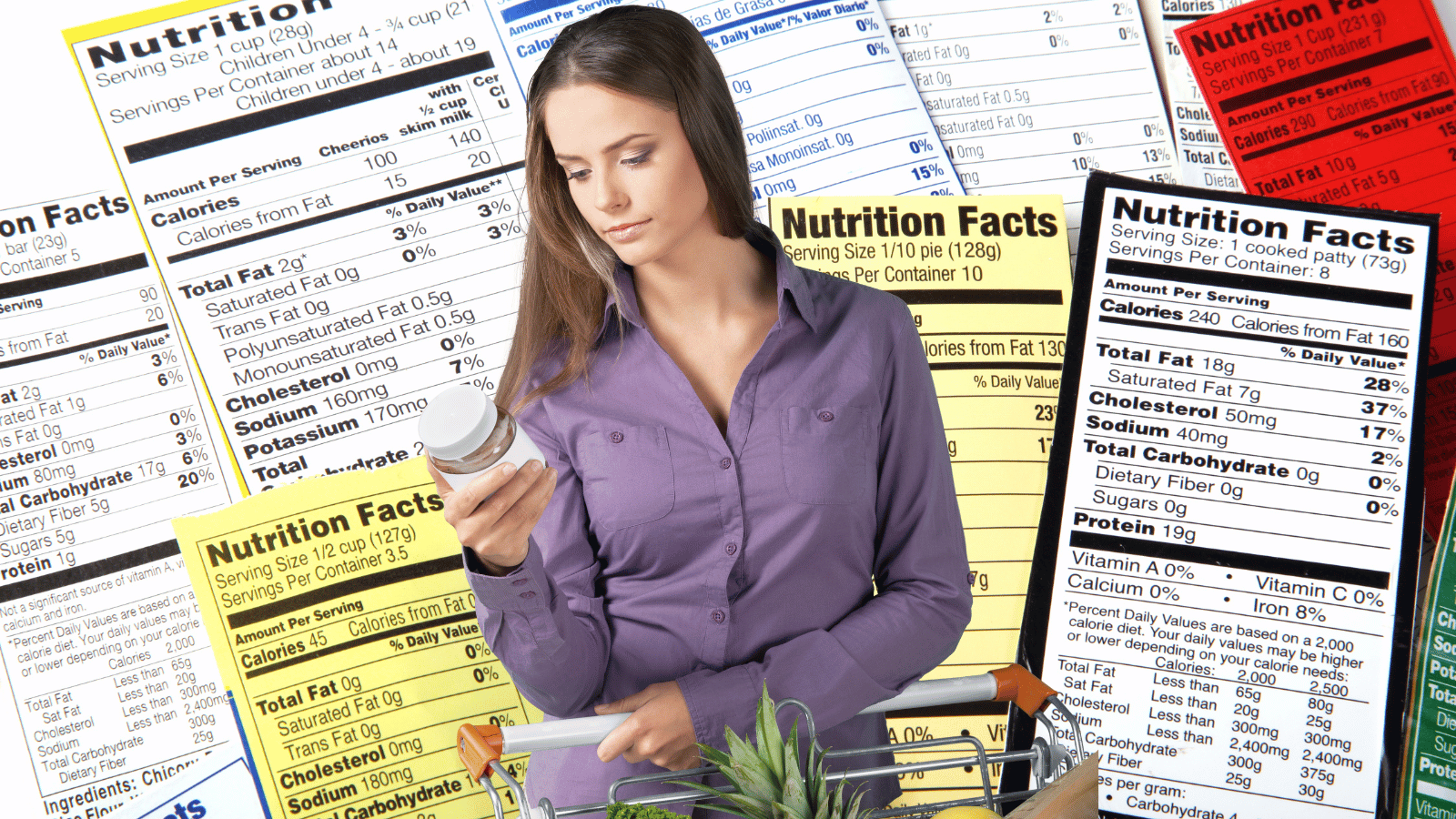
Last week, I wrote my Monday Morning Blog on The Truth About Processed Foods and Health Risks and many said you enjoyed having me share about nutrition so I’m going to follow it up with this article focusing on reading food labels to know what you’re putting in your and your family’s body. Unfortunately, you can’t trust that everything in the grocery store or even health-food stores is healthy. You also can’t trust the wording on the packages used as a marketing tool to actually trick you into thinking a food item is good for you. It’s deceptive and hopefully will become illegal with MAHA calling for truth in labeling.
I want to stress the importance of knowing what you’re putting into your body, which you expect to last a lifetime and isn’t replaceable. Just like paying close attention to what goes into fueling your car. If a product has ingredients incompatible with our brand of car, it destroys the operating mechanisms of the vehicle. The same is true with our physical bodies.
Always Read Food Labels
I saw on Facebook a man posting a picture of the ingredient list on his can of kidney beans and asking why it included sugar?! A great question. Good for him reading the label, but I’m sure he wishes he’d read it before he bought the beans.
The ideal is to eat fresh whenever possible and avoid boxed, canned, and processed foods. Shop primarily on the outside aisles of the store, avoiding the long center aisles where most of the processed food is located. You don’t always have time to make everything from scratch, so we’ll talk now about tips for label reading. Purposely, manufacturers make the printing on most labels so tiny you might need a magnifying glass, cheater glasses, or use the magnifying App on your phone so you can read the fine print. If the ingredient list is super long, probably best to put it back on the shelf and not in your shopping cart!
I read every label. If I don’t recognize an ingredient, I don’t buy the item. I avoid soy because of my breast cancer history. Some soy mimics estrogen in the body. The FDA has allowed the food industry to add soy indiscriminately to much of our food. “Soy lecithin” is one of the most ubiquitous additives in our food supply. It’s primarily an emulsifier found in everything from salad dressings to vitamins. The soy portion comes from soybean oil extracted from soybeans. You can avoid the brunt of soy lecithin by eliminating most processed foods, but read the labels.
Unfortunately, most labels are purposefully ambiguous. The FDA is supposedly making labels more user-friendly, but the food industry is protesting against the higher cost of making new labels. They spend trillions of advertising dollars marketing processed foods that have gone from 0 % to 70% of our diet in the last 100 years!
Did you know food companies hire lobbyists to push against printing scientific health information on food labels to red flag an ingredient like sugar that could be harmful to your health?! Food companies also know transparency makes it easier to identify what’s in our food. Even though by law they must list ingredients, they can still craftily use misleading language and terms and miniscule print on the outside packaging. The goal of food companies is to meet minimum FDA standards while still enticing you to buy their product.
Food companies care about sales not your scales! Profit not your health.
Following are some tips to help you make wise choices. You want to be a discerning shopper who spends money on food that’s actually nutritious and not potentially harmful to your body. Companies design packaging to be attractive and catch your attention to pick it up.
Before it goes into your basket, take a minute to carefully checkout the front and back labels. I once had someone say you should never need to read a label. I replied, “You should never buy a food item that you haven’t read the label!”
Front of Package Deception
1. Don’t be fooled by marketing subjective terms like “healthy,” “all natural,” “fat free,” “wholesome,” “sugar-free,” “no sugar added,” “light,” “low-calorie,” “fruit-flavored,” “keto-certified,” “low-carb or zero carb,” “whole grains” or “multigrain.”
In the United States, some of these claims do involve standards set by the Food and Drug Administration (FDA), which I’ll indicate. However, others have very little or no guidance surrounding their use or misuse.
- “Natural foods” “all natural foods” “wholesome” are widely used in food labeling and marketing with a variety of vague definitions. The implication is they’re minimally processed foods that don’t contain manufactured ingredients, but the lack of standards in most jurisdictions makes the terms meaningless.
- “No sugar added” or “sugar-free” doesn’t mean the ingredients don’t contain sugar, just that there’s no extra sugar added.
- “Light” has no specific regulated guidelines. “Low-calorie” has to have 40 or less calories than the regular food item.
- “Fruit-flavored” doesn’t indicate real fruit, but an added fruity chemical. The FDA doesn’t specify how much “real fruit” must be in a product to tout “made with real fruit.”
- Packaging can say “whole grains” or multi-grain” even if the product is primarily made with refined grains ground into flour. Check the ingredients on the back label.
I eat Keto and the most recent indiscriminate label on a product is “keto-certified” in an official looking emblem. An entrepreneurial third-party website charges companies for this “certification.” There are no legal or official keto or paleo certifiers! Other commonly used terms are “Keto-friendly” or “Paleo-approved,” but always read the label’s nutritional breakdown and ingredient list for verification.
“Low-carb or zero carb” has no FDA guidelines, so it can indiscriminately appear on any label. Keto eaters deduct fiber from natural carbs, but some products like “zero-carb” tortillas have added high fiber ingredients such as cellulose or wheat starch. That’s the deductible fiber, but other ingredients still have carbs! An example of “natural deductible fiber” would be fiber in fresh asparagus.
2. Don’t trust “organic” unless there’s a legally certified insignia on the package. The term “organic” has an established legal definition in many countries, including the United States, as well as an agreed upon international standard. “All natural” and “organic” are NOT interchangeable terms. In some countries, “all natural” is defined and enforced. In others, such as the United States, it has no meaning!
If the package states “organic ingredients,” read the label to be sure all ingredients are organic. All “organic” foods aren’t necessarily good for you—organic sugar is still sugar. Just because it’s organic doesn’t give it a free pass. It still has “wasted calories” with no nutritional value.
3. “Gluten-free” products must contain less than 20 parts per million of gluten per the FDA to be on the label, so some producers of “gluten-free products” cannot by law use the term because they don’t meet the standard. However, even marshmallow packages now say “gluten-free,” but that doesn’t mean you should be eating marshmallows!
4. “Cholesterol-free” can still contain ingredients with cholesterol. “Zero trans-fat” can contain up to 0.5 grams per serving.
Always turn the package over and read the back information!
Package Back Label Information
Never buy a food item without reading the back label! Ignore the claims on the front of the package. The back is where by law they must give you the nutritional breakdown of the food item.
1. The nutritional breakdown of calories, fat, carbohydrates, sodium etc. is by serving size. Often it’s ½ cup. Who only eats a half cup of ice cream or cereal? If you eat 2 cups, you need to multiply the nutritional breakdown, including calories, by four! On crackers and chips the serving size is a number i.e. 10 chips. If you eat twenty chips, double all the nutritional facts listed.
2. Listed ingredients go from highest content to lowest. If water is the first ingredient, the product is mostly water. For example, a lemon drink that promotes “made with lemon” may list lemon juice as the last ingredient and water as the first ingredient. It’s water with a little lemon or it could even be lemon flavoring.
3. If you don’t recognize an ingredient, Google it on your phone. You don’t want to put an unknown into your body…do you? Chances are it’s a preservative to avoid.
4. “Added sugar” is listed in the nutrition facts and in the ingredients list. Even if it’s organic or raw . . . sugar, honey, or maple syrup is still sugar with calories. Natural occurring ingredient sugar is in the nutrition facts portion of the label.
5. Avoid anything with high fructose corn syrup. Especially check children’s snacks. I sent my husband on a mission of finding barbeque sauce without high fructose corn syrup. He read every label on the grocery store shelf. There was only one brand without it.
6. Check the sodium level and remember it’s per the label’s serving size.
7. Avoid saturated fat & trans fats and all “vegetable oil,” usually followed with a list of oils in parenthesis so they don’t commit to any specific oil. Vegetable oils are highly refined and unstable from exposure to chemicals in the refining process that strips them of antioxidants, vitamins, and minerals. They’re stored in body fat, which may lead to inflammation. Examples of bad vegetable oils are corn oil, canola or rapeseed oil, cottonseed oil, soybean oil, sunflower oil, safflower oil.
You’ll find vegetable oil or vegetable shortening in fried foods, packaged baked goods, salty snacks, salad dressings, even coffee creamers (use half-and-half).
The best overall oil to use is Extra-Virgin Olive Oil. Also, avocado oil and refined coconut oil.
Here’s an example of deceptive marketing. The front of the Blue Diamond Gourmet Almonds package reads “Almonds with garlic, herb, & olive oil.” It even has a “certified NON GMO” emblem. That all sounds awesome! But the ingredients listed on the back are: “Almonds, vegetable oil (almond, canola, safflower and/or sunflower) sea salt, roasted garlic, spices (oregano, basil, rosemary) and the very LAST ingredient, extra-virgin olive oil! What a disappointment!
When buying nuts, the ingredients should only be the nut and maybe sea salt if they’re salted nuts. Nothing else! If other oils are listed, unless it’s olive oil, return the package to the shelf.
8. Look for added soy, which could be in the form of soybean oil or soy lecithin. No one needs the amount of soy added to our food. Today, most labels indicate if there’s soy.
9. Choose wild fish caught naturally, not farmed raised in tanks.
Buy Fresh, Be Healthy
When possible, buy fresh and avoid packaged, processed foods, then you don’t have to worry about labels unless you’re looking for organic. Then look for the legal certified organic emblem. Beware at farmer’s market. They may claim not to use pesticides, but you’re only taking their word for it. Whatever you’re buying, always check the dates for freshness.
It may take longer to shop at first, but soon you’ll know which foods to avoid. You may think buying organic is more expensive, but with all the products you aren’t buying, you’ll actually reduce your food bill and increase your health.
Comparing Two Labels
Can you tell which one I would recommend?
“Prego Roasted Garlic & Herb” even boasts on the back label “Gluten-Free.” Ingredients: Tomato puree (water tomato paste), Diced Tomatoes, Tomato Juice, Sugar, Dried Onions, contains less than 1 % of salt (but there’s still 470 mg sodium per ½ cup serving), Canola Oil, Diced Roasted Garlic, Spices, Citric Acid, Dried Garlic, Basil, Natural Flavoring. (Hmm what’s natural flavoring?)
“Rao’s Homemade All Natural, Premium Marinara” Ingredients: Italian Whole Peeled Tomatoes, Olive Oil, Onions, Salt, Garlic, Basil, Black Pepper, Oregano. (Their ingredients live up to “all natural” real food, but I doubt they made it at home LOL)
Happy shopping!
PS I may miss a few Mondays in August and September as we wind down summer, so don’t worry I’ll be back.
Please leave your comments here.


 Susan Neal Bio






 You might consider doing this study I wrote for