#AloneTogether

The one thing everyone has in common today with most people around the world is that we’re all at home. Unless you’re in the healthcare community, work at an “essential” business or one that has figured out how to do curbside pickup, you’re experiencing alone time.

Those who have children or family members at home might be laughing that you wish you had some alone time.

In recent years, there’s been infrequent unity across political and spiritual differences, but COVID-19 has leveled the playing field. Well, maybe not political divides—sadly, many are trying to make this crisis political.

The last significant unifying occurrence in America would probably be 911. While we all mourned together the horrific attack on our country, New York suffered the brunt of pain and loss.

COVID-19 is indiscriminate. It’s a pandemic. The entire world is experiencing pain and loss. We’re all in this together. Even though states and countries may be handling this crisis differently, the streets of most towns and cities are empty.

We’re #alonetogether!

Physical Distancing but Not Social Distancing

The first time I heard the term “social distancing,” it grated on me like fingernails on a chalkboard. I didn’t like it. People are saying it will be our new normal. That would be a tragic fallout of this experience.

We will probably need to stay at a physical distance from each other, maybe not hug or handshake for a while. Some say forever.

But socially isolating ourselves from each other permanently is dangerous and unsustainable. Social distancing can never become social disengagement!

We need each other. We need physical touch. We need to stay in touch!

Since the beginning of Creation, The Lord God said, “It is not good for the man to be alone. Genesis 2:18

God created us as social beings to interact and communicate with each other, not distance ourselves emotionally, spiritually, physically, socially, or mentally.

The ultimate punishment for someone in prison is solitary confinement, alone.

Even if you’re not typically a social person, social isolation leads to loneliness, which leads to poor physical and mental health.

How can I say that?

Well here are some statistics from a psychologist for those who suffer from loneliness:

29% are more likely to have coronary artery disease

32% are more likely to have a stroke or die

40% are more likely to have dementia, if they’re in that age group.

  • When we stop using our cognitive skills to interact, our brain starts deteriorating.
  • When we stop using our relational instincts to interact, our emotions start deteriorating.
  • When we stop using our physical impulses to interact, our body starts deteriorating.

In an article by Axel F. Sigurdsson, MD, PhD, Loneliness, Social Isolation, and Poor Health, He pointed out

“Studies show that loneliness and social isolation are associated with increased risk of early mortality. Being socially connected increases not only psychological and emotional well-being but also has a positive influence on physical health.”

“Although loneliness is usually associated with social isolation, it is important to discriminate between the two. Social isolation refers to a lack of contact with other people, while loneliness indicates a state of mind.”

Despite these different definitions, there is significant overlap between social isolation and loneliness. Hence, the terms are often used interchangeably.”

You might be actually living alone in isolation right now or you might be feeling isolated even though you’re not physically alone.

We’re out of our routines. Maybe you went to work every day and now you’re out of work or working from home.

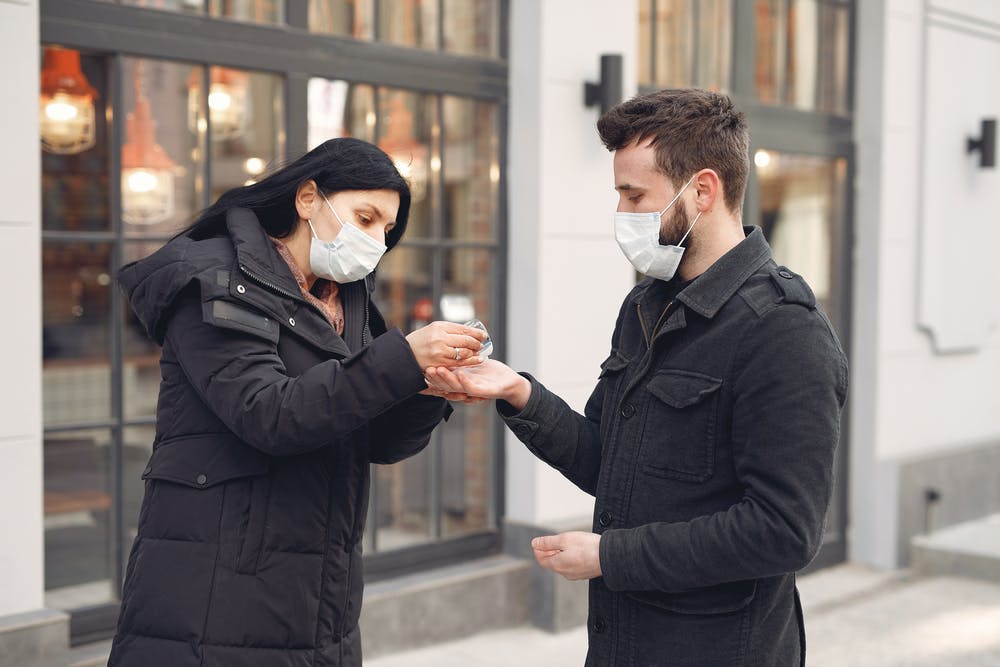
How many times did we complain about having to grocery shop, but now it’s considered an “essential” reason to leave home. It’s a luxury even though we have to mask up and wear gloves and deal with empty shelves, at least we’re out of the house and among other people.

We’re #alonetogether!

We Can, and Must, Stay Socially Connected Even While Quarantined

#Alonetogether

Social media probably creates more virtual friends, than face-to-face friends. Yet aren’t those of us on social media glad we have these “friends” to communicate and commiserate with because we’re all going through something similar. It gives us a sense of social connectedness.

As our fresh food supply at home started dwindling, I looked in the refrigerator vegetable drawer and there was a big package of organic Romaine hearts and a bundle of avocadoes. That was all. So I put a post on Facebook, “I have Romaine lettuce but only avocadoes to make a salad. What else do you put in your salads? #nothingfresh #stayinghome.”

I started getting immediate responses and within hours, I had 100 comments and many new ideas for my salads. I heard from people I haven’t “talked to” on Facebook or in person for years from all walks of my life. We couldn’t share a meal together, but they were eager to help me plan mine.

My cousin read the post and commented, “These all sound so good!”

It almost felt like I had a group of friends helping me make dinner, while they probably were working on their dinner too.

If you’re not a social media fan, you can use SKYPE, ZOOM, or video chatting and messaging to talk while seeing each other. I mentioned in last week’s blog, #America Works Together Keeping the Faith, how my grandkids gave me a virtual birthday party.

We can use the tools we have to stay connected with each other. Churches who have video transmitting capability are reporting more online viewers and commitments to faith than they would ever have at church on Sunday. God is using the “screen” to reach people for Christ.

God uses inconvenient, unpleasant circumstances for good and so can we. It’s not the same as being together, that’s for sure, but it’s what we have right now.

We’re #alonetogether!

A note on social media. Stay away from negative input or people that bring you down emotionally. Avoid getting into political discussions or any that cause you anxiety.

“Call Your Mama!”

In one news report, the Surgeon General was discussing why older people were more susceptible to the coronavirus. He also addressed the loneliness that especially occurs if they’re living alone or unable to drive, be active physically, or get out of the house. Now they can’t even visit with their grandchildren and friends.

He closed his talk with “Call your mama!”

I would say my daughter and I have talked more since the pandemic started than we did before. It wasn’t like we didn’t talk a lot, we just talk more now—not texting or on Facebook, but on the phone. Hearing each other’s voice, laughs, and sometimes tears!

The story of the Rosetans may help to understand the importance of family relations and social surroundings for the risk of heart disease and other physical and mental illnesses.

In 1964 a study published in the Journal of the American Medical Association examined a population of recent Italian immigrants in Roseto, a small town in the state of Pennsylvania. The study was instigated because the town doctor was completely baffled by the Rosetans’ near immunity to heart disease. He reported his observation and an extensive statistical population study funded by the American State and Federal governments was conducted.

The study compared health statistics of Rosetans to neighbouring towns and the initial results were astonishing. During the seven year period of study from 1955-1961:

No-one in Roseto under the age of 47 died of a heart attack; there was a complete absence of heart disease in men under the age of 55

The rate of heart attacks in men over 65 was half the national average

The death rates from all causes was 35% lower than anywhere else

The study confirmed the town doctor’s findings and went on to examine the factors that gave the Rosetans such improved health. It became known as the ‘The Roseto Effect’.

While living in the town to conduct the study however, the researchers observed several major differences as to how the Rosetans related to others in their community. They noticed a remarkably close-knit social pattern that was cohesive and mutually supportive with strong family and community ties, where the elderly in particular were not marginalized, but revered. Put simply, the Rosetans lived in brotherhood with one another.

The Roseto effect is a term used to describe the phenomenon by which a close-knit community experiences a reduced rate of heart disease.

So call your Mama, Dad, Grandparents, or extended family! Your life and their life could depend on it right now.

#AloneTogether!

The Loneliness Epidemic

I’ve mentioned in previous blogs that God has been nudging me to write a book on loneliness. He planted the seed in my mind last fall as my latest book Everyday Brave: Living Courageously as A Woman of Faith was releasing. I kept putting God off. We spent six weeks after the release of this book in Southern California. Then we returned home to the holidays, and before we knew it, we were experiencing a pandemic where people are isolated! Alone! Lonely!

I said, “Lord, forgive me for not taking You seriously when You put the theme of loneliness on my heart.” I had been asking people to pray for me to start writing, but I often said I was afraid the Lord would ask me to personally experience loneliness before I could write about it.

Well here we are. I’m in the high-risk category for COVID-19. I’m isolated! I’m writing.

I know many of you are experiencing some type of loneliness now or you have in the past. Would you be willing to share your story to help someone else? I need to hear from you!

  • When have you experienced loneliness?
  • How are you dealing with staying home now?
  • How did it present itself to you?
  • How did you overcome it, or maybe you haven’t yet?
  • How did God help you through it or what helped you the most?

You don’t have to answer in the comments here if that’s uncomfortable, but I would so appreciate receiving your story. I’ve noticed more people want to share their stories these days to help others and to help themselves heal.

Remember we’re all #Alonetogether!

I wanted to remind you that Everyday Brave: Living Courageously As A Woman of Faith is at a reduced price on my website for the month of April. I’ll sign and personalize it for you. It might make a thoughtful Mother’s Day gift for someone or for you. We’re certainly living in times requiring us to Get Our Brave On.
Return to top of page

We’re Brave Women of Integrity

We're Brave Women of Integrity

The annoying song announcing a new text was playing early in the morning. I opened the text and to my surprise, there was a message from the insurance company saying they were sending a check for the completion of our reconstruction work after our basement flooded last Thanksgiving. Yes, I said last Thanksgiving!! What a journey it’s been for nine long months but now it was finally over! Closure.

But as I looked at the amount, there was something wrong! It was twice as much as we should receive. The reconstruction had been going on for so long that different people were now overseeing the construction, and the original insurance adjuster was long gone. Our claim was handed off to at least four other people.

Unless we pointed out the error, our claim would be closed. Forever. Filed away.

But we knew the error. God knew the error. And we knew what we needed to do.

So hubby contacted the construction company’s office and told them they needed to send the insurance company the correct final amount.

I contacted the most recent insurance claims resolution specialist I’d been working with and told her the check was not the correct amount.

Then I added,

“I’m sure you don’t receive many emails saying you paid us too much!” And signed it “Appreciate your help! Have a blessed rest of the day.”

She emailed back,

“I really appreciate your honesty! Like you mentioned, we never get emails advising we have overpaid.” And she signed, “Have a blessed day as well.”

[Tweet “We never know whose life our integrity and honesty is going to touch and influence.”]

We never know whose life our integrity and honesty is going to touch and influence. I’m sure she receives many emails and phone calls from angry disgruntled clients. And who hasn’t complained about insurance companies and the cost of insurance.

But what really impressed me the most was her telling me to also have a blessed day. In today’s politically correct environment, we might think we have to avoid a “spiritual” greeting and opt for a vanilla generic “Have a nice day.” What do we really mean when we say “nice”? It’s an overused cliché definitely better than saying nothing but a missed opportunity to say something meaningful. I’ve noticed that when I offer a blessing, people stop and take notice.

[Tweet ” I’ve noticed that when I offer a blessing, people stop and take notice.“]

As women of integrity, we stay true to who we are in Christ and Christ in us, regardless of the circumstances. I’m not saying we lead out with the Gospel, but that we live out the Gospel.

For example, you’re with a group of people you’ve just met and you sense by their conversation and actions that they’re not believers. What do you do now? Try to fit in and not make too many waves, or act the same as you would if you were with a group of fellow believers? We’ve all been there sending up a silent prayer asking God, “Help!”

[Tweet “As women of integrity, we stay true to who we are in Christ and Christ in us, regardless of the circumstances.”]

In today’s culture, it takes courage to stand up for our faith and live with integrity. The world doesn’t reward or encourage moral standards. You stand out in a crowd when you do what’s right instead of compromising or taking the easy way out. This is nothing new. Paul certainly would have had an easier life if he backed down every time someone challenged him for being a believer. But the message the Apostle Paul gave to the church at Corinth is still a source of encouragement for Christians to bravely and boldly live with integrity today: “Be on your guard; stand firm in the faith; be courageous; be strong” (1 Cor. 16:13).

I looked up the definition of integrity and here’s what I found: the quality of being honest and having strong moral principles; moral uprightness; virtue; character; incorruptibility; goodness. It saddens me to think how hard it is for Christians today to live with integrity without being confronted and bullied in schools, college campuses, sports, jobs, social media, in business, and even with some friends and family. It’s not easy, but it is courageous.

Living with integrity is not popular, but it is possible. It’s not the world’s way, but it is God’s way! And that’s all that matters to us, right!

[Tweet “[Living with integrity is not popular, but it is possible. It’s not the world’s way, but it is God’s way! And that’s all that matters to us, right!”]

As we watch civil law go counter to God’s laws and rampant tolerance for everything except Christianity, we’re under intense pressure to comply. God says, “Stand firm in the faith” and don’t crumble. Biblical courage means obeying God’s laws and not condoning or compromising on anything that Scripture opposes.

Yes, it’s uncomfortable and difficult, but as long as we stay tethered to God, biblical truths, and each other, He will provide us the strength we need to go against the worldly secular culture when it opposes our faith. Be strong. Be courageous. Be brave. Be a woman of integrity!

We're Brave Women of Integrity

You can preorder Everyday Brave and receive it as soon as it releases! I’m excited about this book, can you tell?!

Here is an interview I gave on At The Library, where I talk about what inspired me to write this book and answer a number of questions about it. If you’ve never heard my voice, it might be fun to listen so you’ll know what I sound like when you read my blogs and books!

If you received this blog by email, please leave a comment here.

Return to top of page

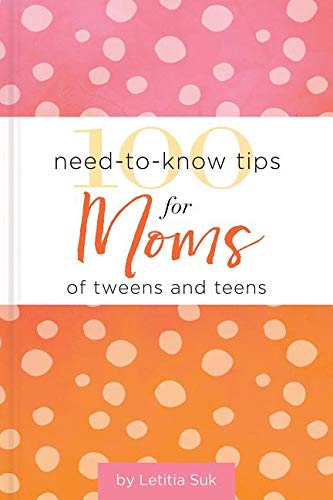
7 Tested Tips for Moms of Teens by Letitia Suk

Letitia Suk is a guest on the Monday Morning Blog today with some great advice for moms of teens and tweens from her book Need-to-Know Tips for Moms of Tweens and Teens. This is a delightful and practical guide for grandparents too. As I was reading, I thought about my thirteen-year old granddaughter who was coming with her friend to stay with us for a week. Our tendency is to fall back on our own parenting style with the next generation, but I knew I could learn a few tips, and I did. Leave a comment for a chance to enter the drawing to win this precious book!

My new book Everyday Brave: Living Courageously as a Woman of Faith is now available for preorder on Amazon. Mothering tweens and teens is a courageous and brave endeavor that I know we would all agree we couldn’t do without the help of God. Chapter 7 is “Brave Mothers.” 

7 Tested Tips for Moms of Teens

by Letitia Suk

7 Tested Tips for Moms of Teens

Parents and teens will clash, often! If you are a parent of a teen, you have been on both ends of the clash at some point in your life. Remember?

As much as it feels challenging to get through this roller coaster season of parenting, choose the long view. This current crisis will pass but your relationship with your teen lasts the rest of your life.

[Tweet “One of the primary tasks of parenting teens is to establish a bond of closeness that can be drawn on for the long journey ahead.”]

Your pediatrician might not have mentioned it, butone of the primary tasks of parenting teens is to establish a bond of closeness that can be drawn on for the long journey ahead.

Hard as it is to believe, most of the years spent with our child in our lifetime will be in an adult-adult relationship that will outlast these exciting, fun-filled, and often challenging years.

[Tweet “Most of the years spent with our child in our lifetime will be in an adult-adult relationship”]

Looking for help?

If you need some help today, 100 Need-to-Know Tips for Moms of Tweens & Teens is a grab and go guide to read along the way. Each short, stand-alone tip provides an immediate opportunity to strengthen your relationship with your teen for both now and for the decades ahead.

Here is a sample of some of the tips you can try right now. 

  1. Keep Texts Friendly.

Chances are your teen prefers texting to most other forms of communication. Choosing to use this tool in a friendly way is a great way to stay in touch. Tell them you love them and are praying for their test. Ask them if they need anything from Walmart or send fun tidbits of information. TM can also be used to ask questions like when will the car be back? Will you be home for dinner? Could you please pick up a gallon of milk?

Decide that you will only use this creative tool for positive thoughts or simple questions. This is not the vehicle to complain (the kitchen is a wreck), criticize (you never leave gas in the car), or accuse (you were out too late last night). Keep it upbeat and they’ll want to keep opening their inbox.

  1. Ditch the Dread.

“Wait till they’re teenagers!” was the foreboding warning that awaited me on almost every turn of the stroller. “Wait till they start mouthing off” or “Wait till they get to high school” or “Wait till they get their driver’s license” have been part of the mom to mom network from the playground to the boardroom. It was never clear what the wait was for, it didn’t have the same hopeful note as waiting to go on vacation.

[Tweet “Instead of expecting the worst, start the day with a hope and a prayer that your teen is going to be OK.”]

            Instead of expecting the worst, start the day with a hope and a prayer that your teen is going to be OK.

Talk back to your inner critic and tell her you’re doing just fine as a mom. Don’t let moments of doubt turn into dread-fests. Be the voice of the yay-sayer instead of the naysayer to other moms. Expect the best and wait for it to come!

  1. Wave the White Flag.

If you are the parent of a teen, you have engaged in some conflict. In fact, you might have instigated it or inflamed it. It is never too late to wave the white flag and start a round of peace talks in your family. Someone needs to step up and stop yelling, door   slamming, or silent treatment. Might as well be you!

Calling for peace is not glossing over incidents but acknowledging your part in the current conflict. “I was angry, and I insulted your character, I’m sorry.” “I was tired, and I yelled at you. That wasn’t fair.” Asking for forgiveness is also a huge step but necessary to move on.

[Tweet “Conflicts will come and go but the relationship is forever.”]

Conflicts will come and go but the relationship is forever.

What your teen sees from you in the way of how to do resolution will shape their future interactions as well.

4. Leave on a positive note.

When your teen leaves the house for an outing with friends, make a point to say have a good time, you look great, I love you.

[Tweet “The last few minutes of your interaction with your teen can set the tone for the rest of the evening.”]

The last few minutes of your interaction with your teen can set the tone for the rest of the evening.

If your teen leaves the house feeling good about you and about themselves, they will carry those positive feelings with them. Likewise, if they leave home angry, feeling misunderstood, or belittled, those feelings may shape their evening. If you really want to make a lasting impression, occasionally slip a little unasked-for cash!

  1. Avoid Micro-Managing Your Teen’s Faith.

It has been said that “God has no grandchildren” meaning we each have our own faith experience separate from our parents. In our spiritually aware culture, most teens are searching for something/someone to believe in. Your teen’s faith journey might parallel yours, lag behind, or leap ahead. Most likely, it will not be identical just as your faith experience is not the same as your parents.

[Tweet “Your role as a parent is to provide spiritual training for your children, but not to force their faith development.”]

            Your role as a parent is to provide spiritual training but not to force their faith development.

In these teen years, you can nurture your teen’s faith by your prayers, your example, your encouragement, and trust God to work out the big picture. Keep in mind, his timing is rarely the same as ours.

  1. Differentiate Between Rules and Policies.

Try less rules, more policies. A policy has flex to it, a rule is fixed. Use policies for the minors of life such as room cleaning, late phone calls, attendance at family events, established study times, etc. A policy can be changed by request, “I need to talk to Sara tonight, but she won’t be home till 10:30. Can I call her later?” You: “OK, thanks for asking.” Exception given, policy still in place.

Rules, however, cover the majors and are not flexible. No point in your teen asking if they can have a party when you’re out of town. Ditto, there won’t be an exception as to whether they can drink and drive or have a sleepover with their boyfriend/girlfriend. Policies can be created on the spot and revised often. Keep the actual rules very few and very clear.

Remember, rules without relationship can lead to rebellion. 

[Tweet “Remember, rules without relationship can lead to rebellion in children.”]

  1. Bless their Friends, Even the Ones You Don’t Like.

You won’t like all your teens’ friends. Usually announcing that you don’t like a friend quickly elevates this person into sainthood in your teen’s life. The secret is not to let your feelings be known unless your teen is in danger or serious risk from a “friend.”

Find something, anything to comment on positively about the friend. “I like the way ____    is passionate about causes, knows a lot about music, isn’t afraid to be different.” then you might say something casually like, “I am a little concerned about his/her ____(driving?, ditching school? lying? poor relationship with parents, etc.” (choose only one) then follow with, “What do you think about that?” Listen and don’t comment. Very hard tactic to follow but so worth it. Wait it out and see if your impression was wrong or your teen recognizes it’s not a healthy relationship. It almost always happens.

Interested in reading more?

Ninety-two more tips are available in 100 Need-to-Know Tips for Moms of Tweens & Teens (Ellie Claire/Hachette, 2019.) Beautifully designed with inspirational quotes on motherhood interspersed throughout, this book makes an excellent gift for yourself or a friend.

Which of these tips did you need today? 

Have you used any of these tips successfully?

Please leave a comment here for a chance to win a free sign copy of 100 Need-to-Know Tips for Moms of Tweens and Teens.

About the Author:

7 tested Tips for Moms of Teens

Letitia Suk invites women to chase the intentional life. She is the author of 100 Tips for Moms of Tweens and Teens, Getaway with God: The Everywoman’s Guide to Personal Retreat & Rhythms of Renewal. Letitia’s Amazon page

She and her husband, Tom, live in the Chicago area and are parents of four grown children. Letitia’s Website

Return to top of page

Mentoring in a Season of Tragedy and Uncertainty

Mentoring during a time of tragedy and chaos is exactly what will help women incurring loss and fear in today's undertain times.

Hurricanes, earthquakes, floods, fires, riots, death tolls, North Korea, ISIS, our country divided . . . . Not to mention illness, dreaded diagnosis, family unrest, divorce, prodigals . . . . Protests against our President, Christian values, and God. Tragedy and uncertainty assails us when we turn on the news or browse through social media or listen to talk shows. No wonder many are living in fear and dread of the next crisis because there seems to be a new one every day. If there isn’t a crisis, the media creates one.

You may be wondering why I would write on this topic the day before Mentoring for All Seasons: Sharing Life Experiences and God’s Faithfulness officially releases tomorrow, September 12! Because mentoring is invaluable in all seasons of life; so yes, I include a Tragedy Season. It’s not if tragedy happens, it’s when! At sometime in our life, we’re all going to need mentoring or we can mentor from our experiences.

What a blessing to see so many using social media to mentor from their experience with a crisis. As hurricane IRMA headed toward Florida, many who had just experienced hurricane Harvey in Houston were helping Floridians prepare by posting lists of what to stock up on and how to prepare their homes, cars, families. Those who lived in safe areas were offering shelter to strangers. The news couldn’t help but report on how everyone was pitching in to help each other through the many tragedies and losses that occurred from these hurricanes.

Many focused on thanking God that they were still alive even though they lost all their earthly possessions and would have to start all over again. In at least nine states, including Idaho where I live, fires are raging out of control and air quality is unhealthy from the smoke. Christians experience tragedy and loss just like everyone else; it’s painful and hurts. In the Season of Tragedy in Mentoring for All Seasons, I point out that “We desperately need assurance from someone who survived a crisis with her faith not only still intact, but stronger than before.”

[Tweet ““We desperately need assurance from someone who survived a crisis with her faith still intact, and stronger than before.””]

There are also Mentor Tips on what not to say or do with a mentee. The main one: don’t minimize her feelings or make her seem like a bad Christian because her faith is tested and she questions what God is doing. The Mentee Tips point out that the mentor can’t make everything right in the mentee’s life; but she can offer encouragement, a source of Christian love, hope, support, prayer, and understanding.

Several Scriptures I suggest to study together during a tragedy or crisis are:

“And surely I am with you always, to the very end of the age.” Math. 28:20b

“Remember your promise to me;
it is my only hope. Your promise revives me;
it comforts me in all my troubles.” Psalm 119:49-50 NLT

“You have turned my mourning into joyful dancing.
You have taken away my clothes of mourning and clothed me with joy,
12 that I might sing praises to you and not be silent.
O Lord my God, I will give you thanks forever!” Psalm 30:11-12

[Tweet ” Journaling or writing down feelings helps to get them out “]

There are so many others, especially in the Psalms. Journaling or writing down feelings helps to get them out too. A reminder that what feels overwhelming and horrendous will reflect God’s love for us and be our testimony somehow, someway, someday.

Like many of you, I have family in Florida and it’s hard not to obsess over every report of hurricane IRMA. But I’m in Idaho so instead of feeling hopeless and helpless, my husband and I pray continuously (1 Thess. 5:17). Just like the Scriptures tell us to do. We didn’t just pray for our family; we prayed for everyone suffering—maybe that meant we were praying for some of you and your loved ones.

[Tweet “Sometimes it takes a tragedy to turn hearts back to God”]

Sometimes it takes a tragedy to turn hearts back to God. Whatever you think of our President, or whether or not you voted for him, he declared Sunday September 3 a National Day of Prayer. He couldn’t stop the hurricanes, the flooding, the winds, the next hurricane, the loss of homes, the heartache, but he could try to turn hearts back to God through prayer.

That gesture got very little coverage by the media or his critics, but it’s exactly what will start the healing process in everyone’s lives. We need revival in our country, and God’s people need to lead the way back to a country founded on “In God We Trust.”

[Tweet “God’s people need to lead the way back to a country founded on “In God We Trust.””]

In Mentoring for All Seasons, you can read more helps and tips on being a mentor and a mentee during tragedy, uncertainty, and crisis on pages 216-217. In the Mentor and Mentee Shares section, author Heather Gillis tells her tragic story of losing her young son. A mentor helped her take the healing step of writing, which led to Heather mentoring many suffering women. Exactly what mentoring is all about! Chapter Thirteen: A Difficult Season, covers numerous difficult seasons women encounter, including Illness and Health Issues—Yours or a Loved Ones, and many more.

Here’s how you can help me spread the word about Mentoring for All Seasons!

[Tweet “My passion is to bring the generations together and help them live out Titus 2:3-5”]

If you’ve followed my blog and the Woman to Woman Mentoring Ministry, you know my heart is not about book sales. My passion is to bring the generations together and help them live out God’s direction for all Christian women in Titus 2:3-5. I give all the glory to God for allowing me to be About His Work, by blessing me with the incredible privilege of starting this ministry, and then, blessing me again with the unexpected ability to write!

If you feel lead to help share the mentoring message of this new book, here are some ways:

[Tweet “Tragedy can happen suddenly & w/o warning. We need reassurance from a mentor who survived with her faith stronger. bit.ly/mentoringseasons”]

[Tweet “Need a #mentor or to be a #mentor? #mentoringforallseasons is the book 4 u! Order now @ bit.ly/mentoringseasons”]

[Tweet “What a blessing social media full of mentoring from experience with help/tips for those in the path of #IRMA bit.ly/mentoringseasons”]

You can also tweet from all the tweets in this blog.

Thank you! It’s a privilege and honor to connect with you each week. Please let us know by leaving a comment how we can pray if you or a loved one has been in the path of Harvey or Irma.

Mentoring Helps in Seasons of Tragedy and Uncertainty. A mentor can share from her experience and comfort and pray with a troubled mentee.

Mentoring for All Seasons: Sharing Life Experiences and God’s Faithfulness is available now on Amazon, Kindle, and Signed by the Author at her website.

Author Bio

Janet Thompson is an international speaker, freelance editor, and award-winning author of 19 books. She is also the author of Praying for Your Prodigal Daughter; Forsaken God?: Remembering the Goodness of God Our Culture Has Forgotten; The Team That Jesus Built; Dear God, Why Can’t I Have a Baby?; Dear God They Say It’s Cancer; Dear God, He’s Home!; Face-to-Face Bible study Series; and Woman to Woman Mentoring: How to Start, Grow, & Maintain a Mentoring Ministry Resources.

She is the founder of Woman to Woman Mentoring and About His Work Ministries.

Visit Janet and sign up for her Monday Morning Blog and online newsletter at womantowomanmentoring.com

Facebook

Linked In

Pinterest

Twitter

Instagram: JanetAHW

Return to top of page

Follow me on Twitter

I finally did it! I’m tweeting. I would love to follow you and have you follow me at AHWMinistries. I have the link here and will soon add it permanently to the blog.

Hope you’re having a great summer. I’m writing away and I’ll soon have more information for you about what’s coming up from me next year.
Blessings, Janet

Return to top of page
Return to top of page · Copyright © 2026 Crown Laid Down Designs All Rights Reserved · Our Privacy Policy